
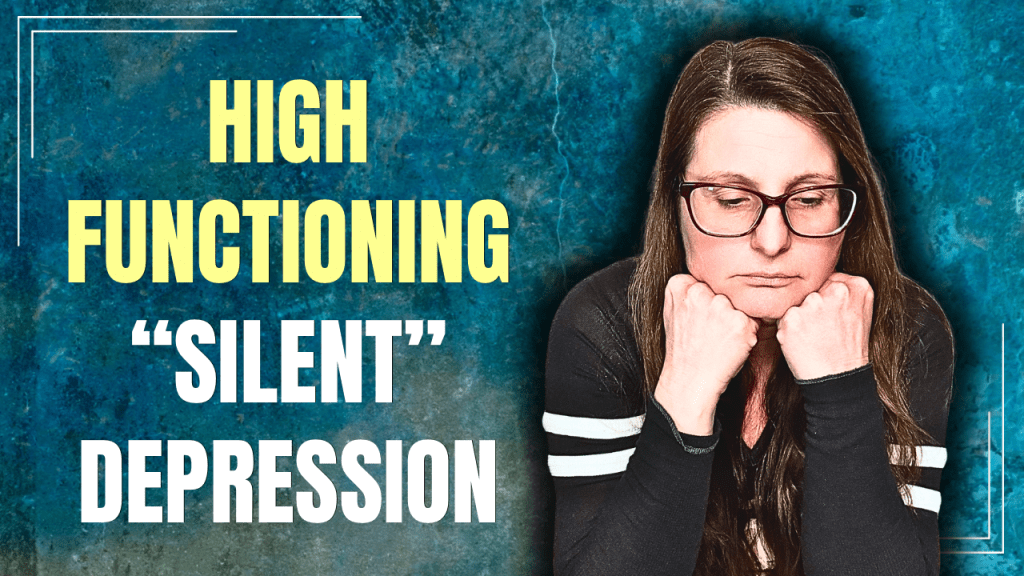
Not all depression looks dramatic.
It doesn’t always look like staying in bed.
It doesn’t always look like tears.
It doesn’t always look like crisis.
In midlife, depression often looks functional.
You’re showing up.
You’re working.
You’re parenting.
You’re caregiving.
You’re answering messages.
You’re keeping appointments.
You’re getting things done.
From the outside, you look “fine.”
But internally?
You feel flat.
Disconnected.
Less motivated.
Less alive.
And because you’re still functioning, it’s easy to dismiss what you’re feeling.
When “I’m Fine” Doesn’t Feel True
Many women in their 40s and 50s experience a subtle emotional shift that doesn’t fit the stereotype of depression.
It may feel like:
Emotional dullness instead of sadness Chronic depletion instead of overwhelm Irritability instead of despair Brain fog instead of hopelessness Withdrawal instead of collapse
You may tell yourself:
“I’m just tired.”
“It’s just hormones.”
“I’m burned out.”
“This is just midlife.”
And sometimes those things are part of the picture.
But sometimes it’s more layered than that.
Why High-Functioning Depression Gets Missed in Midlife
Midlife mental health is complex.
Hormones shift.
Sleep changes.
Stress accumulates.
Parents age.
Children grow up.
Careers peak or plateau.
Identity evolves.
When depression shows up during this season, it blends in.
It can be misdiagnosed as:
Perimenopause Burnout Stress overload Personality changes “Just being overwhelmed”
And while those experiences are real, they don’t fully explain the emotional flatness some women feel.
High-functioning depression often hides behind productivity.
You’re still doing everything.
You just don’t feel connected to any of it.
The Difference Between Depletion and Laziness
One of the most damaging narratives women internalize in midlife is this:
“I should be able to handle this.”
When motivation drops…
When joy feels distant…
When everything feels like effort…
It’s easy to interpret that as laziness or lack of discipline.
But depletion is not laziness.
Depletion is what happens when your nervous system has been in output mode for years — sometimes decades — without true restoration.
Depression in midlife doesn’t always scream.
Sometimes it whispers.
And whispers are easy to ignore.
What Midlife Depression Is Not
It is not weakness.
It is not failure.
It is not ingratitude.
It is not a character flaw.
It is not “being dramatic.”
It is often a signal.
A signal that something internally needs attention.
A signal that your emotional world deserves care — not dismissal.
The Layered Reality of Mental Health After 40
Mental health in midlife is rarely one-dimensional.
It can involve:
Hormonal shifts Neurobiological changes Long-term stress patterns Unprocessed grief Identity transitions Emotional burnout Life-stage reevaluation
When these layers quietly stack over time, emotional numbness can become the default.
You might not feel deeply sad.
You might just feel less.
And “less” can be hard to recognize.
If Something Feels Off
If you’ve been thinking:
“I’m fine… but something feels off.”
Pay attention to that.
You don’t need to be in crisis to deserve support.
You don’t need to be falling apart to take your mental health seriously.
You don’t need a dramatic story to validate your experience.
Sometimes the quiet version is the one that needs the most compassion.
Want to Go Deeper?
I recently recorded a full video breaking down:
What high-functioning depression can look like after 40 Why it blends into hormonal shifts and stress The difference between depletion and laziness What midlife depression is — and what it isn’t Supportive next steps
If this resonated with you, you can watch the full conversation here:
👉 The Quiet Version of Midlife Depression No One Talks About
You are not imagining it.
You are not failing.
And you are not alone in this.
— Lori Wesmiller
Balance & Bloom

 Balance & Bloom 50+