When You’re Functioning but Feel Flat: Understanding Midlife Depression

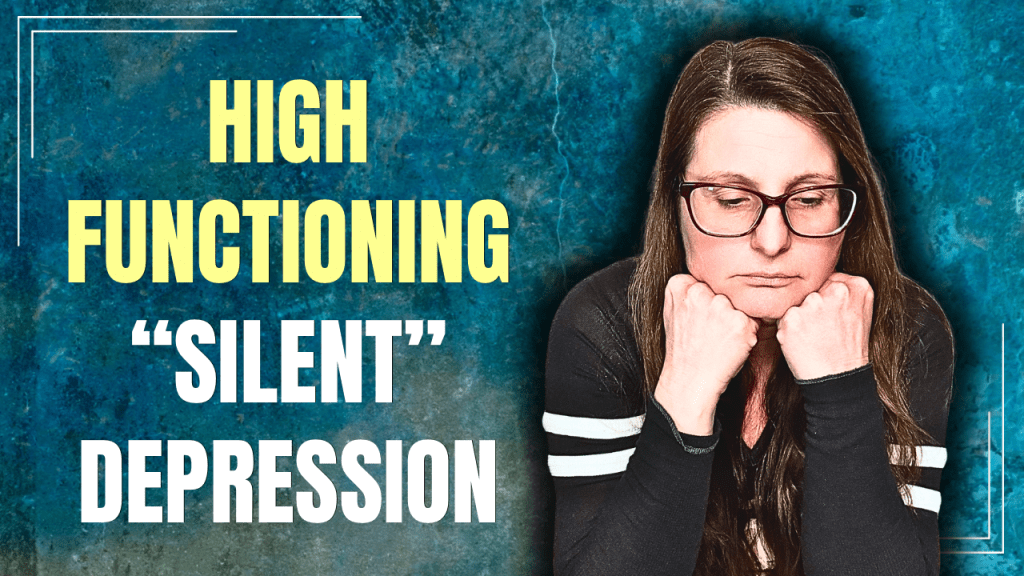
Woman looking down thoughtfully with text reading “High Functioning Silent Depression” on a teal background, representing midlife depression that isn’t outwardly visible.
Midlife depression isn’t always loud

Not all depression looks dramatic.

It doesn’t always look like staying in bed.

It doesn’t always look like tears.

It doesn’t always look like crisis.

In midlife, depression often looks functional.

You’re showing up.

You’re working.

You’re parenting.

You’re caregiving.

You’re answering messages.

You’re keeping appointments.

You’re getting things done.

From the outside, you look “fine.”

But internally?

You feel flat.

Disconnected.

Less motivated.

Less alive.

And because you’re still functioning, it’s easy to dismiss what you’re feeling.

When “I’m Fine” Doesn’t Feel True

Many women in their 40s and 50s experience a subtle emotional shift that doesn’t fit the stereotype of depression.

It may feel like:

Emotional dullness instead of sadness Chronic depletion instead of overwhelm Irritability instead of despair Brain fog instead of hopelessness Withdrawal instead of collapse

You may tell yourself:

“I’m just tired.”

“It’s just hormones.”

“I’m burned out.”

“This is just midlife.”

And sometimes those things are part of the picture.

But sometimes it’s more layered than that.

Why High-Functioning Depression Gets Missed in Midlife

Midlife mental health is complex.

Hormones shift.

Sleep changes.

Stress accumulates.

Parents age.

Children grow up.

Careers peak or plateau.

Identity evolves.

When depression shows up during this season, it blends in.

It can be misdiagnosed as:

Perimenopause Burnout Stress overload Personality changes “Just being overwhelmed”

And while those experiences are real, they don’t fully explain the emotional flatness some women feel.

High-functioning depression often hides behind productivity.

You’re still doing everything.

You just don’t feel connected to any of it.

The Difference Between Depletion and Laziness

One of the most damaging narratives women internalize in midlife is this:

“I should be able to handle this.”

When motivation drops…

When joy feels distant…

When everything feels like effort…

It’s easy to interpret that as laziness or lack of discipline.

But depletion is not laziness.

Depletion is what happens when your nervous system has been in output mode for years — sometimes decades — without true restoration.

Depression in midlife doesn’t always scream.

Sometimes it whispers.

And whispers are easy to ignore.

What Midlife Depression Is Not

It is not weakness.

It is not failure.

It is not ingratitude.

It is not a character flaw.

It is not “being dramatic.”

It is often a signal.

A signal that something internally needs attention.

A signal that your emotional world deserves care — not dismissal.

The Layered Reality of Mental Health After 40

Mental health in midlife is rarely one-dimensional.

It can involve:

Hormonal shifts Neurobiological changes Long-term stress patterns Unprocessed grief Identity transitions Emotional burnout Life-stage reevaluation

When these layers quietly stack over time, emotional numbness can become the default.

You might not feel deeply sad.

You might just feel less.

And “less” can be hard to recognize.

If Something Feels Off

If you’ve been thinking:

“I’m fine… but something feels off.”

Pay attention to that.

You don’t need to be in crisis to deserve support.

You don’t need to be falling apart to take your mental health seriously.

You don’t need a dramatic story to validate your experience.

Sometimes the quiet version is the one that needs the most compassion.

Want to Go Deeper?

I recently recorded a full video breaking down:

What high-functioning depression can look like after 40 Why it blends into hormonal shifts and stress The difference between depletion and laziness What midlife depression is — and what it isn’t Supportive next steps

If this resonated with you, you can watch the full conversation here:

👉 The Quiet Version of Midlife Depression No One Talks About

You are not imagining it.

You are not failing.

And you are not alone in this.

— Lori Wesmiller

Balance & Bloom

Keto for Your Brain? How the Medical Keto Diet May Support Mental Health in Menopause

By Lori Wesmiller, Mental Health Therapist & Founder of Balance & Bloom 50+

Healthy foods for the ketogenic diet

Let’s start with a surprising question

What if your anxiety, brain fog, and emotional ups and downs in menopause weren’t just about hormones… but also about how your brain is being fueled?

The medical ketogenic diet—a therapeutic, doctor-supervised version of the popular keto trend—is gaining attention not just for weight loss, but for its powerful effects on brain health and mental well-being. Especially in midlife women.

In this post, we’ll explore what the medical keto diet actually is, how it works, and why it may help stabilize mood, reduce inflammation, and support cognitive health during menopause.

What If You’ve Been Fueling Your Brain the Wrong Way?

When I first heard that some doctors were prescribing fat as medicine for the brain, I did a double take.

As a therapist and a midlife woman going through the rollercoaster of menopause, I’ve spent years learning about how food affects mood. But what I discovered about the medical ketogenic diet went far beyond the usual clean eating advice. This isn’t about weight loss or counting macros—this is about how your brain gets its fuel.

And if you’re dealing with brain fog, mood swings, anxiety, or mental exhaustion in midlife, it’s a conversation worth having.

midlife woman discussing menopause options with her doctor

What Is the Medical Ketogenic Diet?

Let’s separate fact from fad.

The medical ketogenic diet is a therapeutic, high-fat, very low-carb diet originally developed in the 1920s to treat epilepsy. Unlike trendy versions of keto focused on weight loss, the medical approach is often clinically supervised, especially when used for neurological or psychiatric conditions.

Here’s how it works:

When you cut carbohydrates significantly, your body switches from burning glucose to burning fat. This metabolic shift produces ketones, an alternate fuel source—especially powerful for the brain.

Researchers are now exploring how ketones can impact serious conditions like:

Bipolar disorder Major depressive disorder PTSD Alzheimer’s disease Perimenopausal mood instability

And the results are promising.

The Brain on Ketones: Why It Matters

Your brain typically runs on glucose, but it can thrive on ketones—especially when its regular fuel system becomes less efficient (like in aging or menopause). Here’s what ketones may do:

🧠 Reduce neuroinflammation

🧠 Balance neurotransmitters like GABA and glutamate

🧠 Enhance mitochondrial function (energy production at the cellular level)

🧠 Protect neurons from oxidative stress and degeneration

🧠 Stabilize mood by smoothing out energy crashes

In a 2025 Stanford study, individuals with severe, treatment-resistant mental illness saw significant symptom improvement on a medically supervised keto protocol. Other research supports benefits in reducing symptoms of anxiety and depression—especially when blood sugar, insulin resistance, and inflammation are involved.

Midlife, Menopause & Mental Health: The Connection

Midlife woman thinking about menopause

So where does menopause come in?

During perimenopause and menopause, estrogen levels decline, and with that drop comes a ripple effect across your brain. Estrogen helps regulate neurotransmitters, blood sugar, inflammation, and even how your brain metabolizes energy. That’s why many women report symptoms like:

Brain fog Forgetfulness Anxiety or panic Mood swings Depression Motivation loss

Add in poor sleep, cortisol spikes, and hormone chaos, and it’s no wonder your mental health takes a hit.

Medical keto may provide a steady, efficient energy source for the brain when estrogen is no longer buffering the system. It’s not a cure-all—but it’s a tool worth understanding.

But Is It Safe? And Is It for You?

This isn’t about going full bacon-and-butter overnight.

The medical ketogenic diet should be explored with a provider—especially if you have thyroid issues, adrenal concerns, or take medications for mood or blood pressure. Nutrient deficiencies, electrolyte imbalances, and fatigue can happen without guidance.

Questions to explore with your provider:

Do I have signs of insulin resistance or metabolic dysfunction? Have I experienced mood instability or anxiety since entering perimenopause? Do I respond poorly to blood sugar fluctuations or caffeine crashes? Am I already on a high-carb diet and noticing energy crashes or mental fog?

A skilled dietitian or integrative provider can help personalize the approach—because keto is not about extremes. It’s about fueling your brain in a way that supports mental resilience.

The Takeaway: It’s About Options

If you’re in midlife and feel like your brain is stuck in molasses… or like your mood isn’t matching your mindset, keto might be worth exploring—not as a diet, but as a metabolic therapy.

Want More Support?

If you’re in midlife and feeling overwhelmed by mental changes, hormonal chaos, or just off, you’re not alone. I’ve been there too.

🎥 Watch my YouTube video:

▶️ Keto Isn’t Just for Weight Loss—It’s for Your Mental Health Too!

Learn how the Ketogenic diet can alleviate mental health symptoms from anxiety, depression, schizophrenia and more!

💛 Free Therapist-Created Guides to Help You Feel Like Yourself Again

🧠 Feeling more anxious than usual in your 40s or 50s?
You’re not alone. Midlife anxiety is real—and manageable.
Download the free guide:
Midlife Anxiety—Understanding, Calming & Reclaiming Peace
👉 Download here

🌸 Want clarity around your hormones, HRT, and how to feel better in your body?
Get the free guide:
Hormone Harmony—What Every Woman Needs to Know
👉 Download here

You’re not too late. You’re just getting started.

Let’s rewrite the midlife story—one hormone, one habit, one healing moment at a time. 💚

💡RESOURCES & RESEARCH

Here are the studies and articles referenced in this blog post:

Stanford University (2025) – Keto diet therapy shows promise in serious mental illness https://news.stanford.edu/stories/2025/04/keto-diet-therapy-mental-illness-research Nature (2020) – Ketogenic diet effects on mood and brain function https://www.nature.com/articles/s41598-020-80727-x.pdf Medical News Today (2023) – Keto diet improves mental health and metabolic symptoms https://www.medicalnewstoday.com/articles/a-keto-diet-may-help-improve-severe-mental-health-metabolic-symptoms The Journal of Clinical Psychiatry – Keto diet for bipolar disorder https://www.psychiatrist.com/news/ketogenic-diet-shows-promise-for-bipolar-disorder/ The Journal of Clinical Psychiatry – Can keto help treat mental illness? https://www.psychiatrist.com/news/can-physical-changes-like-a-keto-diet-help-mental-illness/ NIH / PMC (2024) – Keto’s role in PTSD, anxiety, and neuroinflammation https://www.ncbi.nlm.nih.gov/pmc/articles/PMC11182043/ Frontiers in Nutrition (2025) – Ketogenic diet as adjunctive therapy in psychiatry https://www.frontiersin.org/journals/nutrition/articles/10.3389/fnut.2025.1506304/full